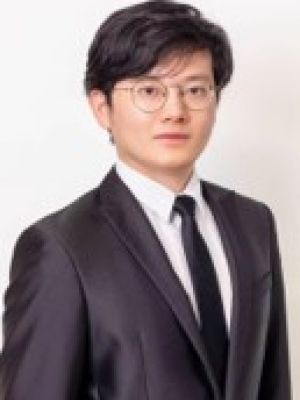
个人简介
李硕,博士,现任中山大学人工智能学院副教授、博士生导师。主要从事人工智能与计算力学的交叉研究,重点关注复杂多物理场仿真、科学机器学习与AI代理模型、数字孪生及智能优化,自主研发了物理仿真引擎 UniGEnS。近年来,发表国际期刊论文二十余篇,主持日本学术振兴会(JSPS)若手等项目,曾获东京大学研究科长奖等。
教育经历
· 2019.09-2022.09,东京大学,博士
· 2018.02-2018.06,法国格勒诺布尔国立理工学院,交换学习
· 2017.09-2019.06,中山大学,硕士
· 2013.09-2017.06,中山大学,学士
工作经历
· 2025.04-2026.05,东京大学,工学部,助理教授
· 2023.07-2025.03,东京大学,工学部,特任助教
· 2022.10-2023.06,东京大学,韧性工程研究中心,特任研究员
· 2018.11-2019.05,法国卡达拉舍研究中心,研究访问
研究与招生
研究领域:人工智能与计算力学交叉研究,包括(1)科学机器学习与 AI 代理模型(降阶模型、图神经网络等);(2)多物理场数值方法与求解器开发(CFD、DEM、MPS、MBD 等);(3)面向具身智能的物理仿真与机器人学习;(4)智能优化、控制与数字孪生。
欢迎有意攻读博士、硕士学位的同学,以及对科研感兴趣的本科生与我联系。
邮箱:lish595@mail.sysu.edu.cn
所获荣誉
· 2025,日本混相流学会,新兴研究奖
· 2025,日本粉体工学会,粉体工学未来奖
· 2023,东京大学研究科长奖
· 2022,ICCCI-2022 国际会议,最佳报告奖
· 2017,中山大学,优秀毕业生
· 2015–2018,国家奖学金(连续四年)
科研项目
· 2025-2028,日本学术振兴会(JSPS)科研费若手研究(25K21215),多尺度降阶建模框架的开发,主持
· 2023-2026,东京大学社会合作讲座(产学合作),面向下一代粉体工艺系统的数字孪生基础技术,共同负责人
论文成果
1. M. Castro, S. Li, K. Yang, T. Imatani and M. Sakai. Reduced-order modeling of particle-fluid flows with heat transfer via a curriculum learning approach, Chemical Engineering Journal, 534, 174249, 2026.
2. M. Castro, S. Li, H. Imai, K. Yang and M. Sakai. Machine learning acceleration of granular and solid-fluid flow simulations: A review, Powder Technology, 476, 122346, 2026.
3. K. Yang, S. Li and M. Sakai. An advanced reduced-order model for real-time and high-accuracy computation of industrial gas-solid flow systems, Physics of Fluids, 37(12), 123346, 2025.
4. S. Li and M. Sakai. Advanced graph neural network-based surrogate model for granular flows in arbitrarily shaped domains, Chemical Engineering Journal, 500, 157349, 2024.
5. S. Li, G. Duan and M. Sakai. On reduced-order modeling of gas-solid flows using deep learning, Physics of Fluids, 36(3), 033340, 2024.
6. G. Duan, S. Li and M. Sakai. Feasibility analysis of a POD-based reduced order model with application in Eulerian-Lagrangian simulations, Industrial & Engineering Chemistry Research, 63, 780–796, 2024.
7. S. Li, G. Duan and M. Sakai. Development of a reduced-order model for large-scale Eulerian–Lagrangian simulations, Advanced Powder Technology, 33(8), 103632, 2022.